
Slovenian citizenship can be obtained by birth, descent, through naturalization, or via simplified programs available to foreign nationals. The general procedure allows applicants to apply for a passport after 10 years of residence in the country, 5 of which must be with permanent resident status.
The Republic of Slovenia is a member of the European Union, the European Economic Area, and the Schengen Area. A developed economy, a higher standard of living compared to many non-EU countries, as well as safety and stability, make it an attractive destination for foreign nationals. The application process, outlined further in this article, is regulated by the national Law on Citizenship.
If you are considering obtaining European citizenship, you can consult our migration lawyer for a free consultation — they will help you develop the most suitable immigration strategy tailored to your individual needs.
Benefits of Slovenian Citizenship
As a member of the European Union, Slovenia grants its citizens a range of rights and advantages. Among the key benefits of holding a Slovenian passport are:
- the ability to travel to around 170 countries worldwide, including visa-free access to many destinations and simplified entry permits to countries such as the United States;
- the freedom to choose any EU country for residence;
- access to social guarantees and eligibility for various state benefits;
- the opportunity to study at universities across the EU either free of charge or at reduced tuition rates;
- access to European healthcare systems, with costs often covered by insurance;
- the right to purchase real estate in most EU countries without requiring special permits from local authorities;
- participation in a wide range of government-supported business programs;
- access to loans and financial services from European banks.
Among the potential drawbacks that may influence the decision to obtain citizenship is a relatively higher level of taxation.
Start the EU citizenship process right now
Services of experienced immigration lawyers
 Leave a request and get a detailed consultation
Who Can Obtain Slovenian Citizenship
The following categories of individuals may apply for Slovenian citizenship:
- persons who have one or both parents holding Slovenian citizenship;
- individuals born in Slovenia, even if the identity of their parents is unknown;
- foreign nationals who meet all the requirements for obtaining citizenship through naturalization.
For applicants choosing the naturalization pathway, the following requirements must be met:
- at least 18 years of age;
- renunciation of previous citizenship;
- actual residence in Slovenia for at least 10 years, including a minimum of 5 years with permanent residence status prior to applying;
- no criminal proceedings as a defendant, including no prison sentence longer than 3 months or a suspended sentence with a probation period exceeding 1 year;
- stable income not lower than the minimum required level;
- proficiency in the Slovenian language at a minimum level of A2;
- compliance with tax obligations;
- no indications of posing a threat to society or public order in Slovenia;
- taking an oath of allegiance to respect the democratic constitutional order of the country.
Ways to Obtain Slovenian Citizenship
Slovenian citizenship and a passport can be obtained through the following pathways:
- By descent. This option applies to foreign nationals who are descendants of Slovenian emigrants (up to the fourth generation). To obtain citizenship, they must reside in Slovenia for at least one year.
- Restoration of citizenship. Individuals who previously held Slovenian citizenship but lost or renounced it may restore their status. To do so, they must reside in the country for at least 6 months.
- Through marriage. Foreign nationals married to a Slovenian citizen may apply for citizenship after 3 years of marriage, including at least 1 year of residence in Slovenia.
- By birth. Citizenship is granted to individuals who are born and reside in Slovenia.
- Based on asylum. Individuals granted international protection who have lived in Slovenia for more than 5 years may apply for citizenship.
- Education. Foreign nationals who have obtained higher education in Slovenia may later become citizens. Initially, the applicant enrolls in an educational institution or program and applies for a residence permit by providing proof of admission and sufficient financial means. The residence permit is extended for the duration of studies. After graduation, the individual may remain in the country, find employment, and obtain a residence permit based on work, which can eventually lead to citizenship.
- Family reunification. Parents and minor children who are financially dependent on a family member residing in Slovenia (with at least 1 year of residence permit and permission for extension) may apply to join them. Unlimited family reunification is available to EU Blue Card holders, academic staff, researchers, and employees transferred to Slovenia from non-EU countries or other European states.
- Employment. A foreign national must obtain a single permit for residence and work in Slovenia. The application may be submitted by either the applicant or the employer. The permit can be extended for up to 2 years depending on employment conditions and allows changing jobs. After 5 years, the applicant becomes eligible for permanent residence. After 10 years of residence (5 with temporary and 5 with permanent status), citizenship can be requested.
- EU Blue Card. Highly qualified professionals may obtain an EU Blue Card, which is valid for 3 months longer than the employment contract and can be extended for up to 3 years. One of its advantages is the ability to relocate with family members immediately. Relatives may stay in Slovenia for up to 30 days based on the issued permit, during which time the main applicant must submit residence permit applications for all family members. EU Blue Card holders may apply for citizenship after 10 years of residence.
Slovenian law does not provide for citizenship by investment or by birth to a foreign mother on the territory of the country. For financially independent applicants, an alternative pathway is obtaining a residence permit through entrepreneurship. After completing all required stages, the applicant may later become eligible for citizenship.
Additionally, the naturalization process remains a universal pathway, offering multiple grounds that can eventually lead to Slovenian citizenship.
For citizens of Turkey, there is one legal program that allows obtaining a second passport through a simplified procedure without the need to meet residency requirements or prove language proficiency. This option provides a fast and accessible pathway to European citizenship, granting full rights and privileges across all EU countries, including freedom of movement, work, business opportunities, and access to social and economic benefits.
Obtaining Slovenian Citizenship Through Alternative Pathways
There are alternative options that may allow applicants to obtain citizenship in as little as one year. Slovenian citizenship can be granted under exceptional circumstances to individuals who have made a significant contribution to the country, including in areas such as public life, culture, science, or other fields. These cases are considered extraordinary and are handled on an individual basis.
Applicants from non-EU countries may also consider another simplified route — obtaining citizenship of a different EU member state and then relocating to Slovenia with equal rights as EU citizens. One of the most accessible options is repatriation programs in countries such as Romania, which can take as little as one year and do not require long-term prior residence in Slovenia.
Due to historical changes in borders across Eastern Europe in the 20th century, many applicants from outside the EU may have ancestral ties that allow them to qualify for such programs. Holding a passport from any EU country grants the right to reside and obtain permanent status in another member state, including Slovenia.
To explore the most suitable pathway and assess eligibility for repatriation or other simplified programs, it is advisable to consult migration law specialists who can provide detailed guidance and support throughout the process.
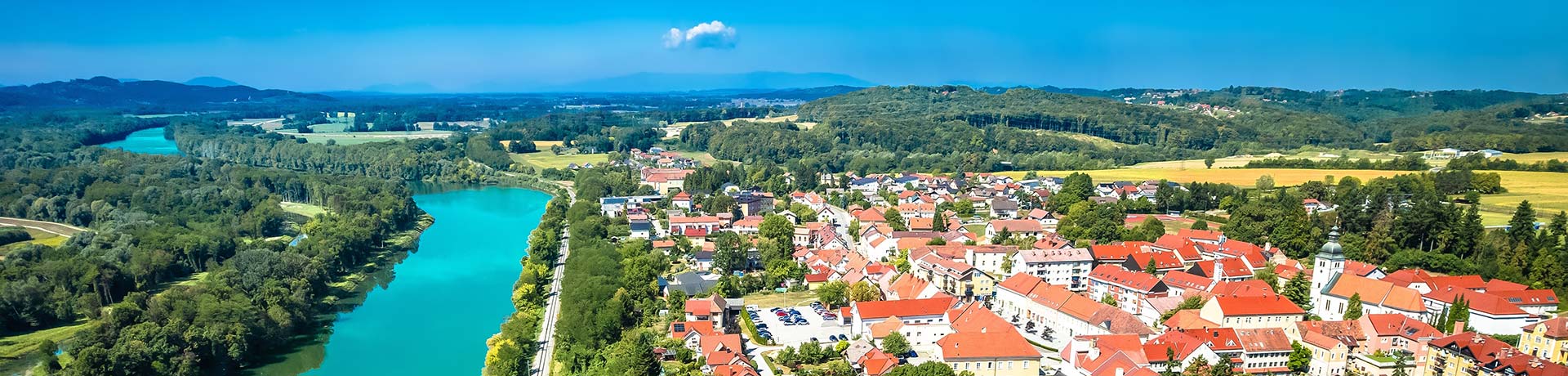
Procedure for Obtaining Slovenian Citizenship
Obtaining Slovenian citizenship is a structured, multi-stage process that requires careful planning, compliance with legal requirements, and a clear understanding of each step. From securing the appropriate visa to meeting residency obligations and passing the language test, every stage plays a key role in successfully acquiring citizenship. Below is a detailed overview of the procedure applicants need to follow.
Required Documents
The dossier submitted together with the application for Slovenian citizenship includes:
- a completed application form;
- a photograph;
- a birth certificate;
- a CV (resume);
- a valid international passport;
- a national ID document;
- proof of residence in Slovenia;
- a school certificate or university diploma;
- a criminal record certificate;
- a marriage certificate (if applicable).
Depending on the grounds for applying for citizenship, additional documents may be required, including proof of sufficient financial means to ensure social and material stability (such as an employment contract, scholarship, pension, self-employment income, or other sources), as well as proof of proficiency in the Slovenian language (for example, a certificate of education obtained at a Slovenian institution).
All documents must be translated into the official language and notarized.
Processing Time and Cost of Citizenship
Obtaining Slovenian citizenship involves certain expenses, the amount of which depends on the chosen pathway:
| Method of Obtaining Citizenship | Approximate Cost, € |
|---|---|
| Standard naturalization | 194.80 |
| Extraordinary naturalization | 185.70 |
| For Slovenian emigrants and their descendants | 185.70 |
The application processing time typically ranges from 6 to 8 months.
There is no legal option to purchase Slovenian citizenship or accelerate the process through investment.
Dual Citizenship in Slovenia
If a foreign national obtains Slovenian citizenship through standard naturalization, they are required to renounce their previous citizenship.
Dual citizenship is generally allowed only in cases of extraordinary naturalization. The right to retain an existing passport is also granted to adult applicants who:
- have been recognized as refugees in Slovenia;
- obtained citizenship based on descent;
- hold citizenship of another EU member state.

Reviews from Slovenian Passport Holders
According to feedback from foreign nationals who have already obtained Slovenian citizenship, the procedure itself and the document preparation process are relatively straightforward. However, since the country is not among the most popular migration destinations, the efficiency of its migration system may be somewhat less developed compared to countries like Germany or the Czech Republic.
Applicants who pursued citizenship through descent often note the well-organized work of Slovenian archives, where it is usually easy to locate the necessary documents. Greater difficulties tend to arise when searching for supporting records in the applicant’s country of origin.
Regarding the language test, many applicants mention that the Slovenian language is not particularly difficult, but examiners take the assessment seriously, so thorough preparation is essential.
Those who handled the application process independently emphasize the importance of carefully studying legal requirements in advance. This helps avoid complications during the process and prevents delays caused by the need to submit additional documents later.
The process of obtaining a second citizenship becomes significantly easier when guided by professional migration lawyers. By selecting the most suitable program on an individual basis, experienced specialists provide comprehensive support throughout the entire process of acquiring EU citizenship. At the same time, the cost of such services remains affordable and can be recouped within just a few months after obtaining the desired status.
 Blog
Blog
Blog
Leave a request and get a detailed consultation
Blog
Blog
Blog
Leave a request and get a detailed consultation
