
The Federal Republic of Germany is a country focused on attracting and employing foreign specialists, as well as migrants who can contribute to its socio-economic development. According to statistics, more than 100,000 applicants receive German citizenship annually. Migration processes in the republic are structured to facilitate the adaptation of foreigners as much as possible, and integration takes place with full support from federal authorities.
One of the stages of immigration to Germany is obtaining permanent residence status. The basis for obtaining such authorization may be self-employment, relocation to join a close relative, employment, and other grounds. The opportunities that permanent residence provides to its holders are described in detail in this article.
Advantages and Disadvantages of Relocating to Germany for Permanent Residence
Compelling arguments in favor of deciding to relocate to Germany for permanent residence may include the following:
- access to the labor market without obtaining work authorization;
- the right to remain in the country without time restrictions;
- the possibility to reside in another Schengen Area state for up to 90 days within 180 days;
- entitlement to social benefits (child allowances, maternity and parental benefits);
- no need to renew status and confirm grounds;
- the right to apply for citizenship after 8 years of residence in the country.
Among the inconveniences that applicants deciding to relocate to Germany for permanent residence may face are the necessity to master the German language, integrate into society, and fulfill the residency requirement (living for a specified period in the republic).
There are ways to obtain European citizenship and migrate to Germany without language knowledge and preliminary residence in the republic. International law attorneys provide assistance with relocation, specifically with legalization.
Methods of Immigration to Germany
One of the conditions for immigration to the republic is having a permanent settlement permit. In standard cases, to obtain permanent residence in Germany, a migrant needs to live in the country for a minimum of 5 years, receive regular income, and have German language proficiency at B1 level. To become a permanent resident, it is important to have knowledge of the country’s socio-legal system, possess living space, and consistently pay pension contributions for 60 months.
Methods of relocation and obtaining settlement permits may have various grounds, namely:
Family Reunification
A relative or family member of a German citizen has the right to claim permanent settlement authorization if they are a spouse, same-sex partner, child, or parent of a German citizen, and have lived in the country with temporary residence status for 3 years, possess sufficient German language skills (B1 level), and have means of subsistence (own or provided, for example, by a spouse). A mandatory condition when a foreign father submits an application and other documents necessary for obtaining permanent residence for a minor daughter or son (without the mother’s presence) is the availability of confirmation from the youth welfare office, issued no later than two weeks prior.
Possession of EU Blue Card
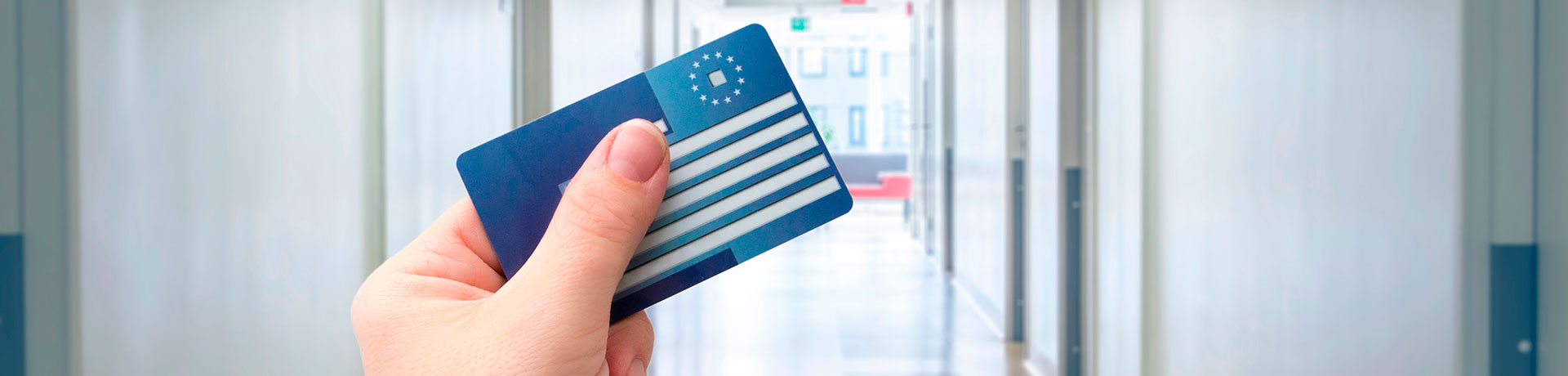
The EU Blue Card, issued for the first time, is valid for 4 years. To obtain it, applicants must have qualifications comparable to German standards, an educational diploma, and a job offer or employment contract with an annual salary of 40,560–52,000 EUR. Currently, a rule is in effect according to which a highly qualified worker, EU Blue Card holder, with 33 months of experience and mandatory insurance can immediately request permanent settlement authorization, and with state language knowledge at C1 level — after 21 months.
Activities of Qualified Workers
Special relocation conditions are provided for specialists, including assistance in obtaining the EU Blue Card. Applicants who have received academic education with professional training in the country or abroad and have worked in the republic with temporary residence status and work authorization for four years (for example, scientific staff and researchers) may submit an application for permanent residence in Germany. Since the end of 2023, immigrant graduates of German universities have the right to receive long-term settlement authorization after just two years of qualified work.
Entrepreneurial Activities and Self-Employment
By engaging in commercial activities based on temporary residence status, one can obtain permanent residence after three years of living in the republic. This requires documentary confirmation of company establishment and availability of means of subsistence. Freelancers have the opportunity to receive settlement authorization only after five years of living in Germany based on self-employment.
Civil servants have the right to become holders of German permanent residence after just three years of residence in the republic. However, permanent residence authorization is not granted if a foreigner intends to purchase real estate in Germany.
There are also simplified European citizenship programs available — for a period from 12 months. Migration specialists will examine available documents, analyze the client’s specific situation, and select the most suitable option for relocation and obtaining an EU passport.
How to Relocate to Germany for Permanent Residence
To relocate to Germany, it is necessary to:
- Determine the method of legalization and collect documents.
- Contact the embassy and obtain a national D-type visa.
- Begin the address registration process (Anmeldung).
- Fulfill mandatory conditions (obtain health insurance, complete integration courses, pass the German language examination) and schedule an appointment at the local immigration office Ausländerbehörde to obtain temporary residence, then permanent residence.
- Attend the issuance of permanent settlement authorization, after which arrange internal documents (identity card, driver’s license, and others).
For relocation to Germany for permanent residence to proceed without problems, it is necessary to have a justified reason and a complete package of documents. Based on the results of personal consultation and conducted document analysis, international law attorneys will compile a clear legalization plan. Following specialists’ advice can significantly save time.
Start the EU citizenship process right now
Services of experienced immigration lawyers
 Leave a request and get a detailed consultation
Document Preparation
For successful submission of a permanent residence application, the following should be attached:
- valid residence permit in Germany;
- photo sized 35 mm × 45 mm;
- income confirmation (current employer salary certificate, pension insurance or provision history, rental agreement copy, audit report, tax assessment, proof of other income);
- valid foreign passport or other identity document;
- proof of health insurance;
- confirmation of adequate living space (purchase or rental agreement);
- certificates of successful completion of integration and language courses or other proof of possessing necessary knowledge.
Additionally, a valid employment contract or job offer, confirmation of continuous education, and professional activity license may be required. Circumstances that make it difficult to fulfill legal requirements must be proven with corresponding documents (for example, disability certificate).
Obtaining German Permanent Residence
The process of obtaining German permanent residence consists of the following steps that the applicant must take:
Cost Calculation for Relocation
Mandatory fees for submitting and processing documents related to immigration to Germany may vary depending on the purpose and region (federal state). To calculate how much money is needed for resettlement to the republic, all expense categories should be considered, from health insurance registration, apartment rental, notarized translation to official payments to government authorities.
| Relocation Expenses | Cost in € |
|---|---|
| D-type visa | 75 |
| Temporary residence | 100–147 |
| Permanent residence | 113 |
| Integration course | 1,603 |
| Housing rental (per month) | 450–3,000 |
| Private kindergarten (per month) | From 1,000 |
| Transportation expenses (per ticket) | From 3 |
Education in state kindergartens, as well as primary and secondary schools in Germany is free. The cost of private educational institutions depends on the federal state of residence.

Relocation Organization
Immigration to the republic involves going through a stage of adaptation to a new place of residence. To relocate to Germany, one needs to start by addressing such tasks as:
- calculating the approximate amount of expenses for the initial period;
- searching for housing for rental or real estate purchase;
- necessity to master German at conversational level;
- studying information about living and working conditions in Germany;
- obtaining a visa or residence permit;
- address registration (Anmeldung);
- health insurance registration;
- enrolling children in educational institutions;
- obtaining work authorization and employment;
- driver’s license transfer;
- opening a bank account;
- arranging internal documents;
- tax identifier registration.
The total amount of expenses for one person excluding rental fees is approximately 970 EUR per month. To search for suitable real estate, one can use, for example, platforms ImmoScout24 and WG-GESUCHT.de. When deciding to relocate to Germany and rent housing, it should be considered that landlords require a security deposit and that all payments must be made in non-cash form. Regarding employment, resumes can be posted on such websites as: Jobbird, Stepstone, Jooble.org, Arbeitnow.
Dangers of Illegal Migration
Illegal migration implies border crossing and/or staying in the country in violation of legislative requirements. One can be held liable for document forgery or expiration of residence authorization. In such cases, penalty sanctions up to 5,000 EUR and/or an order requiring voluntary departure from federal territory with deportation warning may be applied to the foreigner. Additionally, the migrant may face forced deportation, refusal to issue/extend residence permits, temporary or permanent entry and residence ban, and imprisonment for up to three years.
Lawyers can help understand the nuances of migration legislation, save time, and correctly fill out application forms. More information is available during a free consultation.
Top Regions or Cities in Germany for Living
The success of a region, its level of development, and attractiveness for immigrants are influenced by such factors as job availability, housing accessibility, average salary level, university locations, infrastructure, quality of life, ecology, and other aspects.
The top five most popular cities for permanent relocation to Germany include:
Berlin
The capital has a thriving labor market for foreign workers due to the concentration of large companies and startups. Due to high population density in Berlin, demand for rental apartments significantly exceeds supply. The average salary is approximately 3,170 EUR per month.
Munich
Despite being a conservative city, this does not make it less attractive for youth and qualified workers. Munich is located near the Alps. High housing and utility costs are compensated by decent wages, low unemployment rates, and small transportation expenses. The average salary in Munich reaches 3,780 EUR per month.
Hamburg
The city combines Munich’s historical wealth and Berlin’s progressiveness. It has a low average salary level — approximately 3,000 EUR per month. Like other German cities, Hamburg is interested in attracting foreign specialists; it is better for those wishing to work in IT to relocate here.
Frankfurt am Main
The city is Germany’s financial capital due to the concentration of banks, exchanges, and business centers. The average monthly salary is approximately 3,610 EUR. Frankfurt is famous for its high quality of life and developed infrastructure. This densely populated city is one of the most modern in Germany and ranks third in production volume in the country.
Stuttgart
The city is considered the production center of the automotive industry, where favorable conditions for business development have been created. Renting a one-bedroom apartment costs from 770 EUR with additional utility payments. Stuttgart has a high level of population welfare, and there is also a major airport on its territory from which one can fly to any point in Europe. The average monthly salary is 3,528 EUR.
Reviews of Immigration to Germany
Before relocating to Germany, it is necessary to gather information about all possible advantages and disadvantages of migration. Applicants who received temporary residence as freelancers write about encountering certain difficulties and bureaucracy. Those who decided to move to Germany for employment purposes are advised by migrants to undergo professional language preparation in special courses, which will be detailed at the German employment center.
There are many positive reviews from EU Blue Card holders, which provides opportunities for highly qualified employees to relocate to Germany for permanent residence together with children and spouses. Even if the migrant’s husband or wife does not speak German, they have the right to receive unlimited work authorization and temporary residence.
At the same time, foreigners note that the necessity to maintain grounds for residency and constantly renew status imposes certain restrictions. Many migrants prefer obtaining a European passport: the document allows living and working in any EU country and grants the holder equal rights with Germans.
During an individual consultation, a specialist will verify the possibility of using repatriation programs, and lawyers will provide assistance with immigration: file preparation and going through all stages of legalization.
 Blog
Blog  Blog
Blog  Blog
Leave a request and get a detailed consultation
Blog
Leave a request and get a detailed consultation
